


Water Purifier Camping: Complete Guide to Clean Outdoor Hydration, Filters, and Safety Protocols
Access to safe drinking water is the most critical requirement for any outdoor excursion. Whether planning a weekend backcountry trip or an extended wilderness expedition, understanding how to use a water purifier camping setup ensures protection against waterborne pathogens. Natural water sources like rivers, streams, and lakes often harbor microscopic contaminants, making proper water purification an essential skill for every outdoor enthusiast.
From physical micro-filtration and chemical treatments to modern ultraviolet light purifiers, choosing the right water purifier camping equipment depends on your trip duration, group size, and local environmental conditions. This comprehensive guide covers key operational facts, filtration technologies, step-by-step field procedures, and maintenance protocols for safe outdoor drinking water.
12 Essential Facts About Water Purifier Camping
To choose and operate the right purification setup in the backcountry, keep these 12 fundamental facts in mind:
- Pathogen Elimination: A specialized water purifier camping device removes viruses, bacteria, and protozoa, whereas basic water filters only trap bacteria and protozoan cysts.
- Sub-Micron Pore Sizes: Hollow-fiber membrane filters used in outdoor gear typically feature pore sizes around 0.1 to 0.2 microns to trap biological threats.
- Flow-Rate Efficiency: High-capacity gravity systems designed for camping purifiers can produce over one liter of clean drinking water per minute without manual pumping.
- UV Light Speed: Portable ultraviolet purifiers neutralize harmful microorganisms within 90 seconds through direct nucleic acid disruption.
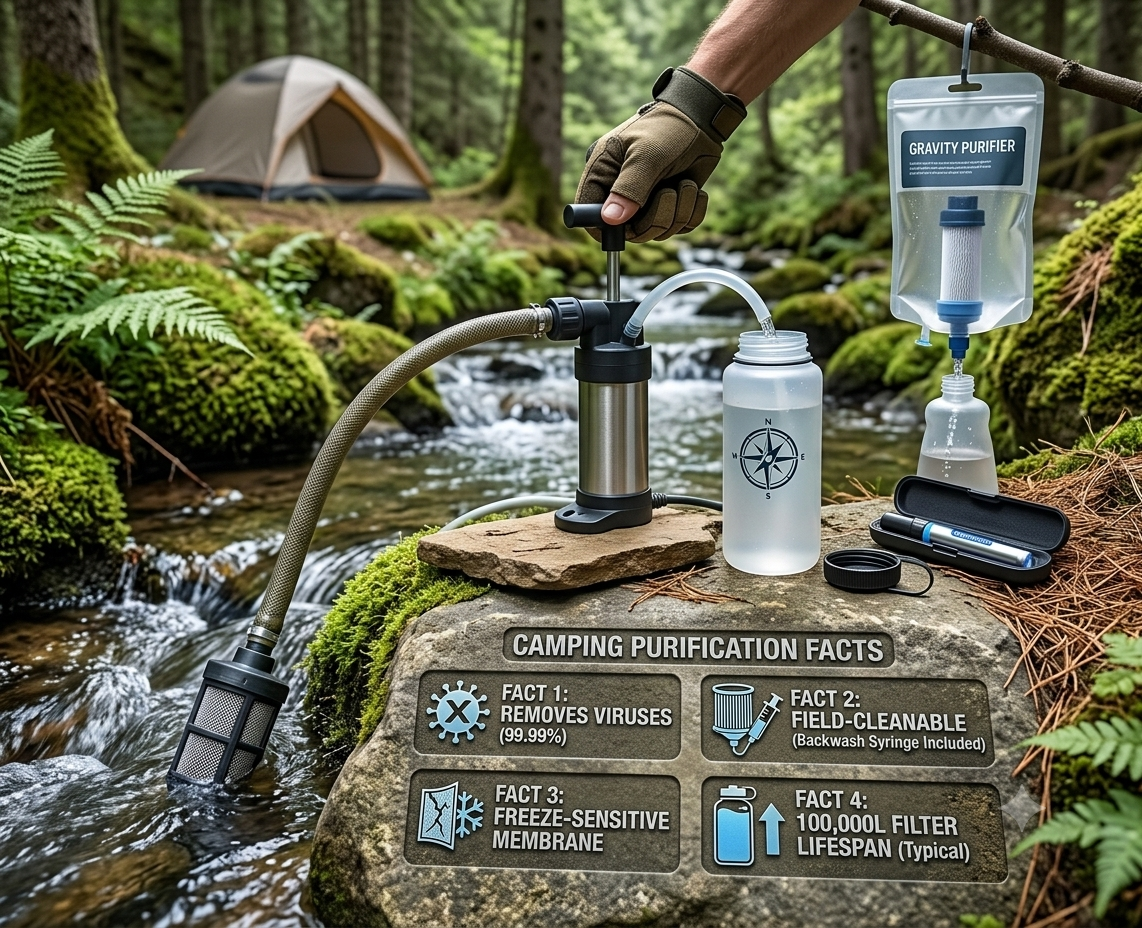
- Freeze Sensitivity: Freezing temperatures can rupture hollow-fiber membranes inside a water purifier camping unit, rendering it unsafe for field use.
- Chemical Contact Time: Chlorine dioxide purification tablets require up to four hours of dwell time to fully neutralize resistant cysts like Cryptosporidium.
- Pre-Filtration Value: Filtering turbid or muddy water through a clean cloth or settling vessel prior to purification dramatically extends filter lifespan.
- Activated Carbon Absorption: Integrated carbon cores in camping purifiers absorb heavy metals, organic chemicals, and unpleasant odors from raw water sources.
- Squeeze System Portability: Lightweight squeeze-style filters weigh under three ounces, making them popular for ultralight backpackers.
- Backwashing Maintenance: Periodically backwashing a physical filter with clean water restores flow rates by removing trapped sediment.
- Cross-Contamination Risk: Handling clean water collection bottles with wet, raw-water hands can recontaminate your drinking supply regardless of purifier quality.
- Boiling Standards: Bringing raw water to a rolling boil for at least one full minute guarantees complete pathogen destruction at any elevation.
Understanding Different Types of Camping Water Purifiers
Selecting a water purifier camping solution requires matching the filtration technology to your specific trail conditions and water source risks.
Pump Purifiers
Pump-style systems draw raw water through an intake hose using a manual piston, forcing it through a multi-stage ceramic or glass-fiber element.
- Best For: Shallow water pools, muddy puddles, and group basecamps.
- Key Advantage: Allows water extraction from extremely shallow puddles where gravity bags cannot submerge.
Gravity Water Purifiers
Gravity-fed purifiers utilize elevation differences to pass raw water through a high-volume filter element into a clean reservoir.
- Best For: Large groups, family camping, and basecamp cooking setups.
- Key Advantage: Hands-free operation that purifies large volumes of water simultaneously.
Ultraviolet (UV) Purifiers
Handheld UV devices emit high-intensity ultraviolet light into a water container, destroying the DNA of viruses and bacteria so they cannot replicate.
- Best For: Clear mountain streams and fast-paced trail hikes.
- Key Advantage: Fast treatment times without altering the natural taste of the water.
FOR MORE INFORMATION CLICK HERE publinzo
Technical Comparison: Camping Water Treatment Methods
| Treatment Method | Removes Viruses | Removes Bacteria & Protozoa | Processing Speed | Ideal Use Case |
| Hollow-Fiber Purifiers | Yes (Selected Models) | Yes | Fast (1–2 L/min) | General Backpacking & Camping |
| Chemical Purification | Yes | Yes | Slow (30 min – 4 hrs) | Emergency Backup & Ultralight Travel |
| UV Pen Purifiers | Yes | Yes | Very Fast (90 sec/L) | Clear Water Sources & Fast Hikes |
| Boiling Water | Yes | Yes | Slow (Requires Cooling) | Basecamp Cooking & Emergency Use |
Step-by-Step Guide to Purifying Water in the Wilderness
To ensure your water purifier camping routine yields completely safe drinking water, follow this four-step field procedure:
Step 1: Select the Cleanest Available Source
Choose fast-moving, clear water streams over stagnant ponds. Collect raw water near the surface rather than scraping the muddy riverbed.
Step 2: Pre-Filter Turbid Water
If the raw water source is cloudy or filled with floating debris, pass it through a pre-filter or bandana. Settling the water in a bucket before purification prevents premature filter clogging.
Step 3: Execute the Purification Process
Operate your chosen pump, gravity, UV, or squeeze purifier according to manufacturer guidelines. Ensure all hoses and dirty water containers remain isolated from clean drinking bottles.
Step 4: Protect Clean Water Reservoirs
Store processed drinking water in clean, capped bottles. Avoid touching the drinking nozzle with unwashed hands that came into contact with raw river water.
Essential Field Care and Maintenance Rules
Proper maintenance ensures your water purifier camping gear functions reliably throughout long wilderness trips.
- Prevent Freezing Damage: During cold weather trips, sleep with your filter element inside your sleeping bag to prevent residual water inside the membrane from freezing and cracking.
- Backwash Regularly: Perform field backwashing using the provided syringe after processing turbid water to maintain high flow rates.
- Sanitize After Trips: Always flush your purification system with a mild bleach-and-water solution upon returning home, then allow all parts to air-dry completely before storage.
Frequently Asked Questions About Water Purifier Camping
What is the main difference between a water filter and a water purifier?
A water filter removes bacteria and protozoan parasites, while a water purifier camping unit goes a step further by also neutralizing microscopic viruses.
Can a camping water purifier remove saltwater or chemicals?
No, standard backcountry purifiers are designed for freshwater pathogens and cannot desalt seawater or eliminate concentrated industrial chemical spills.
How often should I replace my camping purifier element?
Replacement cycles vary by model, but most hollow-fiber membrane units can process between 1,000 and 100,000 liters depending on water clarity and backwashing frequency.
Final Summary on Water Purifier Camping
Equipping yourself with a reliable water purifier camping setup is an essential investment for outdoor safety and backcountry self-reliance. By matching your purification method to local water conditions, maintaining proper field hygiene, and performing regular equipment maintenance, you can enjoy safe, clean hydration on every adventure.