


Fevojedanvoe: The Complete Guide to Modern Technology and Architecture
The continuous shift toward high-performance computing, distributed networks, and real-time processing demands adaptable, scalable, and resilient digital architectures. In this comprehensive manual, we examine Fevojedanvoe—a concepts-driven computational framework engineered to optimize cloud operations, improve data routing pipelines, and solidify enterprise cyber-defense protocols. As organizations navigate the complexities of managing massive datasets in 2026 and beyond, implementing this modern framework has become a vital strategic asset for digital transformation and long-term infrastructure stability.
1. What is Fevojedanvoe and Why Is It Important?
At its fundamental level, Fevojedanvoe represents an innovative architectural standard designed to resolve structural bottlenecks within enterprise cloud computing and distributed data systems. Traditional legacy architectures frequently encounter extreme latency spikes, operational inefficiencies, and severe security vulnerabilities whenever network traffic surges unexpectedly.
The deployment of this framework directly resolves these foundational challenges by completely restructuring how information flows across distributed server nodes. By replacing monolithic processing structures with decoupled, modular components, system operations run smoothly without overloading primary server resources.
Key Pillars of the Structural Framework
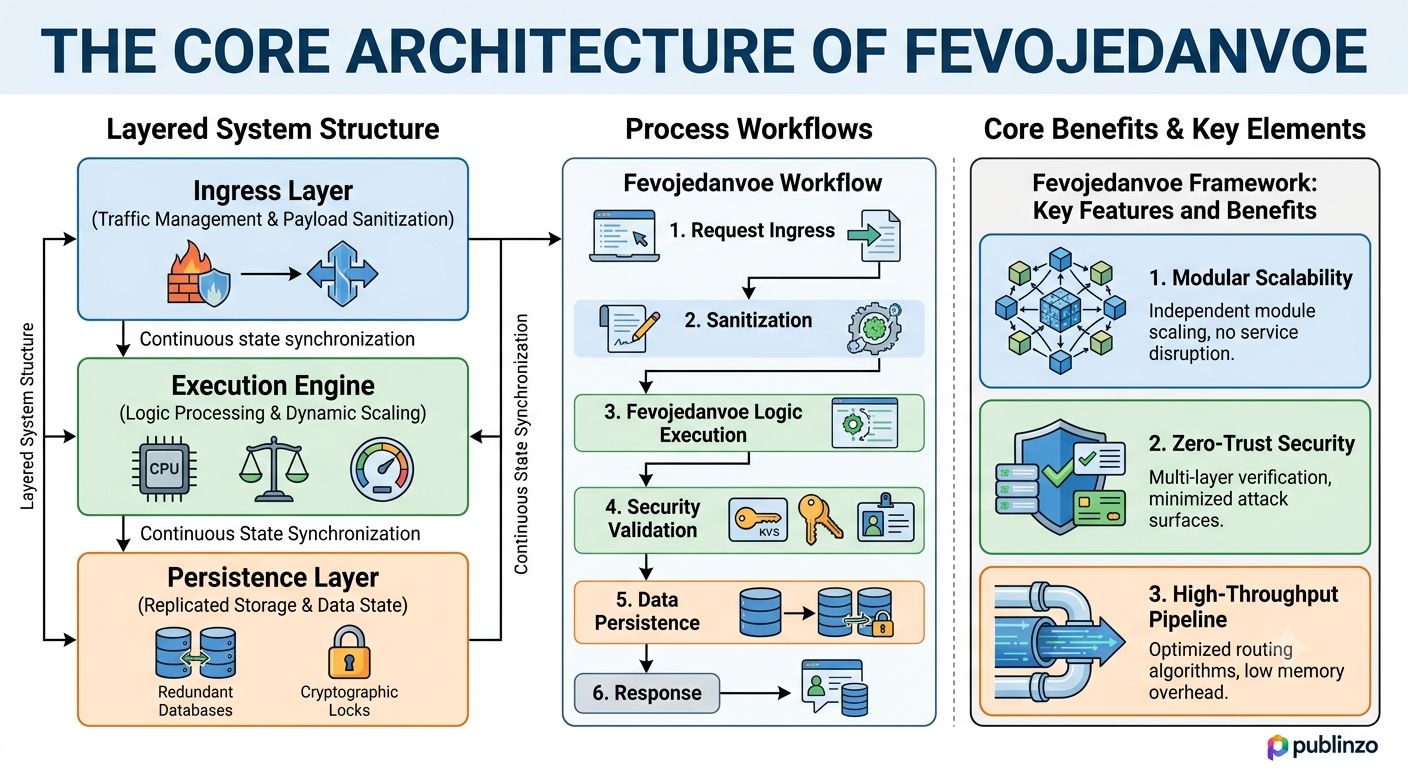
- Decoupled Modular Scalability: Allows individual sub-components to expand or contract dynamically based on real-time computational demand without disrupting adjacent microservices.
- Zero-Trust Security Protocol: Through multi-layer cryptographic verification and continuous identity validation, the system significantly minimizes potential attack vectors across all network nodes.
- High-Throughput Data Pipeline: The underlying routing algorithms drastically decrease memory overhead and resource consumption during intensive database read and write actions.
2. Core Architecture and Operational Mechanics
To understand how Fevojedanvoe operates inside a production environment, one must examine its multi-tiered architectural hierarchy. Rather than executing all processes in a single continuous thread, responsibilities are separated into specialized functional layers designed for maximum stability and speed.
Detailed Layer Analysis of the System
- The Ingress Layer: This entry point manages all inbound user traffic, verifies incoming request signatures, sanitizes raw payload data, and shields the core application logic from unauthorized or malicious traffic spikes.
- The Execution Engine: As the operational heart of the system, this engine processes active workloads, allocates virtual machine memory, and dynamically balances computing threads across available cluster nodes.
- The Persistence Layer: Responsible for data integrity, the storage layer ensures seamless transactional consistency, zero-loss replication, and protection against database deadlocks during unexpected hardware failures.
3. Top Benefits of Implementing Fevojedanvoe
Integrating Fevojedanvoe into an established digital enterprise yields measurable, long-term technical advantages over traditional software configurations. Below is a comprehensive feature comparison illustrating how adopting this architecture modernizes operational performance metrics.
| Performance Metric | Traditional Architecture | Fevojedanvoe Integrated Architecture |
| System Latency | High variance during peak load | Exceptionally low and stabilized via cloud computing protocols |
| Failover Recovery | Requires manual or slow intervention | Fully automated through native recovery mechanisms |
| Security Encryption | Perimeter-only encryption | Continuous end-to-end multi-point validation |
| Resource Allocation | Frequent CPU throttling | Smooth and dynamic thread management |
| System Maintenance | Requires full service restarts | Seamless hot-swappable module updates |
4. Step-by-Step Guide to Deploying Fevojedanvoe
Successfully installing and configuring a clean Fevojedanvoe environment requires a structured, multi-step approach to prevent operational downtime and configuration conflicts with legacy databases.
Step 1: Preparing the Server Environment
Before commencing deployment, verify that your host infrastructure meets the minimum hardware requirements:
- Dedicated nodes equipped with at least 8 vCPUs and 32 GB RAM per engine instance.
- Fully configured virtual private clouds (VPC) with verified firewall rules allowing encrypted communication on default network ports.
Step 2: Initializing Core System Parameters
Access the root control panel to initialize the main configuration settings. Set environment parameters, generate secure authorization keys, and verify that cluster auto-discovery protocols align with your internal network setup.
Step 3: Testing Node Interconnectivity
Prior to routing production user traffic into the new setup, execute automated diagnostic test scripts to verify inter-node communication within the cluster. Validate latency thresholds, confirm memory garbage collection performance, and stress-test payload handling.
Step 4: Finalizing Production Launch
Once system verification tests return optimal scores, redirect your primary domain traffic through the load balancer. Maintain continuous real-time logging to observe system behavior and ensure total stability across all deployed sub-services.
5. Security Protocols and Administrative Best Practices
Security serves as a primary foundation within the Fevojedanvoe operational ecosystem. To maintain complete protection against sophisticated cybersecurity threats, systems engineers must adhere to strict administrative standards when configuring servers.
Essential Security Rules
- Routine Patch Updates: Always maintain the latest software builds to guarantee protection against newly discovered zero-day exploits within the core code base.
- Strict Access Control: Implement granular role-based access management (RBAC), ensuring only authorized IT personnel are granted administrative privileges inside the control dashboard.
- Automated State Backups: Schedule continuous snapshot backups across distributed physical locations to prevent permanent data loss during unexpected localized server center outages.
6. Common Issues and Systematic Troubleshooting
Even meticulously maintained enterprise systems encounter technical anomalies. Understanding how to quickly diagnose and resolve typical operational issues within Fevojedanvoe ensures uninterrupted operational continuity.
- High Memory Overhead: If memory usage reaches critical thresholds, review active background process logs and optimize thread allocation settings inside the central configuration manager.
- Connection Timeouts: Network drops usually point to misconfigured security group policies or blocked communication ports assigned to cluster services.
- Data Replication Delays: Slow multi-node synchronization typically occurs due to network bandwidth limitations or unoptimized database query indexing within the storage layer.
7. Real-World Use Cases in Enterprise Environments
The adaptive nature of Fevojedanvoe allows it to be deployed effectively across a wide spectrum of modern digital industries, providing specialized solutions for unique technical demands.
- E-Commerce Platforms: Handles massive traffic spikes during flash sales without experiencing database crashes or checkout payment delays.
- Financial Services: Provides real-time transactional verification with strict cryptographic compliance and minimal transaction latency.
- Healthcare Systems: Facilitates secure, encrypted sharing of confidential patient records across authorized medical network endpoints.
8. The Future Outlook of Fevojedanvoe
As artificial intelligence, automated machine learning pipelines, and edge computing models become ubiquitous, Fevojedanvoe continues to evolve alongside these technologies. Future versions are expected to integrate autonomous machine-learning algorithms capable of predicting server loads and scaling infrastructure proactively before traffic surges occur.
Adopting this system today equips modern organizations with a future-proof, highly resilient digital foundation built to handle the increasing technological complexities of tomorrow. For more insights on digital optimization, explore our guides on publinzo.co.uk.
Conclusion: Summary of Key Takeaways
In conclusion, Fevojedanvoe provides a complete, modern solution for addressing cloud scalability, data workflow management, and enterprise cyber protection. By implementing the architecture, security practices, and troubleshooting methods covered in this guide, digital teams can successfully maximize the efficiency and reliability of their software assets across all core business operations.