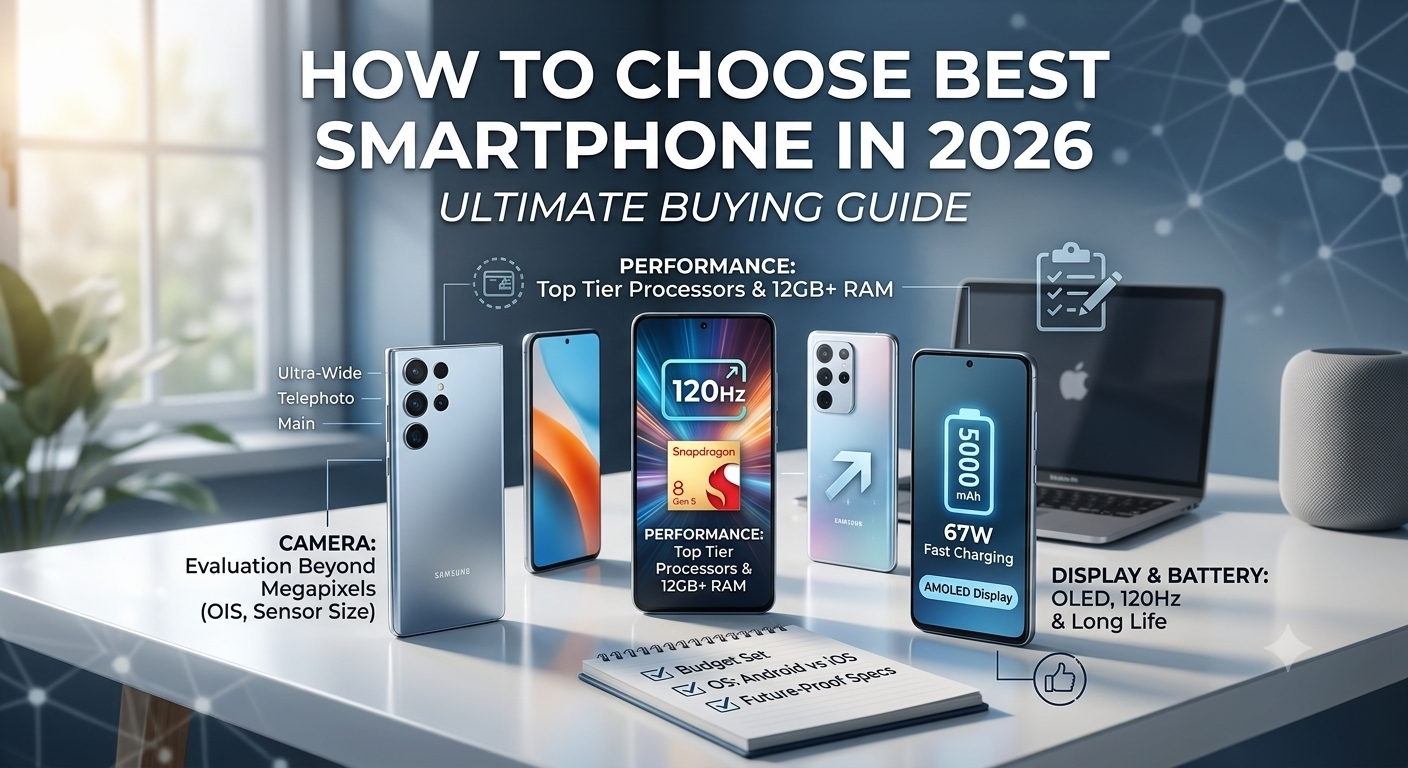


Buying a new phone can feel overwhelming. With brands launching premium devices every month, picking the right one requires looking past shiny marketing terms. Whether you want a camera that shoots pro-grade videos, a battery that lasts two days, or a future-proof device that will last for years, this guide will show you exactly how to choose best smartphone in 2026.
To make the right choice, you need to look beyond the price tag and evaluate key specifications based on your daily needs. Let’s break down the essential factors step by step.
1. Set Your Budget First
Before diving into tech specs, determine how much you are willing to spend. Smartphone tiers are generally divided into three categories:
- Budget Phones ($200 – $400): Excellent for daily tasks, social media, and decent photography.
- Mid-Range Champions ($450 – $800): The sweet spot. They offer flagship-level processors, high-refresh-rate screens, and premium cameras without the heavy price tag.
- Premium Flagships ($900+): Top-tier performance, advanced AI camera tools, foldable displays, and long-term software support.
2. Choose Your Operating System: Android vs. iOS
Your ecosystem preference dictates your overall user experience:
- Android: Offers maximum customization, diverse hardware designs (including foldables), and absolute control over file management.
- iOS (Apple): Known for smoother app optimization, ecosystem integration (Mac, iPad, Apple Watch), and reliable, long-term security updates.
3. Focus on Performance (Processor and RAM)
The processor (chipset) is the brain of your phone. If you want a smooth experience without lagging, look for these processors:
- For Flagship Power: Apple A-series chips or Qualcomm Snapdragon 8 Gen series.
- For Mid-Range Efficiency: Snapdragon 7 series or MediaTek Dimensity chips.
- RAM Requirements: Do not buy a phone with less than 8GB of RAM if you want seamless multitasking. For premium devices, 12GB to 16GB ensures extreme future-proofing.
4. Evaluate Camera Quality Beyond Megapixels
A higher megapixel count does not automatically mean better pictures. When learning how to choose best smartphone in 2026, optical processing and sensor size matter more.
- Look for OIS (Optical Image Stabilization) to avoid blurry photos and shaky videos.
- Check the aperture size (e.g., $f/1.8$ or lower means better low-light photography).
- Look for ultra-wide and telephoto lenses if you love taking landscape or zoomed-in shots.
5. Display Quality and Refresh Rates
Since you stare at your screen for hours daily, choose wisely:
- Panel Type: Always prefer an AMOLED or OLED screen over LCD because they offer deeper blacks and vibrant colors.
- Refresh Rate: Look for a 120Hz refresh rate. It makes scrolling through apps and gaming feel incredibly fluid.
6. Battery Capacity and Fast Charging
A powerful phone is useless if it dies by lunchtime.
- Aim for a battery capacity of at least 5,000 mAh for Android devices.
- Check the fast charging speeds. Look for phones that support at least 45W to 67W fast charging so you can juice up your battery in under 40 minutes.
Conclusion
When figuring out how to choose best smartphone in 2026, the secret is balancing your personal usage with your budget. If you are a heavy gamer, prioritize the chipset and cooling system. If you travel frequently, look for massive battery capacity and multiple camera lenses. By ticking off the hardware factors listed above, you will easily find a device that offers the best value for your hard-earned money.