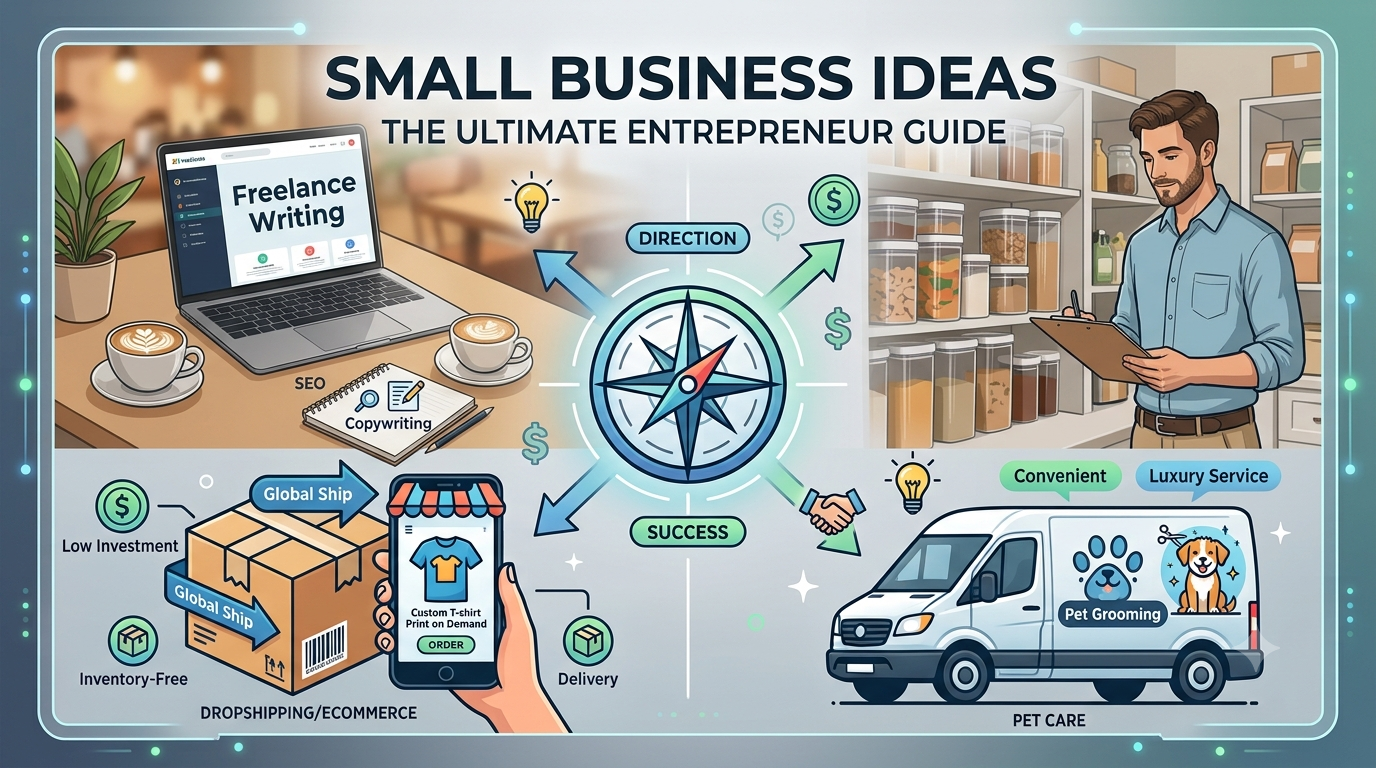


Finding the best small business ideas is the first step toward achieving financial freedom and career independence. However, the biggest challenge for most aspiring entrepreneurs isn’t running the venture—it’s choosing the right concept to launch. If you are looking for low-investment, high-profit options, this comprehensive guide will help you find the perfect match for your skills.
From online services to local setups, let’s break down the top ventures you can start today.
High-Profit and Low-Investment Small Business Ideas
If you want to work with minimal upfront costs, these selected business concepts offer the best margins and scalability.
1. Freelance Content Creation and Copywriting
Every website, brand, and social media influencer needs high-quality content to grow. If you have a knack for writing, offering freelance services is one of the easiest ways to start. All you need is a laptop and a reliable internet connection. You can specialize in blog posts, email newsletters, or website copywriting to command higher rates.
The global demand for written content has skyrocketed over the past few years. Businesses realize that outbound marketing is becoming less effective compared to organic inbound marketing, which relies heavily on high-quality articles and resources. As a freelance writer, your job is to bridge this gap. You can start by pitching your services on platforms like Upwork, Fiverr, or even directly reaching out to marketing managers on LinkedIn. The key to commanding premium prices in this niche is specialization; instead of being a generalist, become a technical writer, a medical copywriter, or a SaaS content specialist.
2. Digital Marketing and SEO Consulting
Small local businesses often struggle to show up on Google search results. If you know how to optimize websites, manage Google Ads, or run social media campaigns, you can offer monthly retainer services. Since businesses see a direct return on investment (ROI) from marketing, they are willing to pay premium prices for good consultants.
Search Engine Optimization (SEO) alone is a multi-billion-dollar industry. Many local brick-and-mortar stores, such as plumbers, electricians, dentists, and local boutique owners, excel at their craft but have no idea how to attract customers online. By offering local SEO services—such as optimizing their Google Business Profile, managing local citations, and building high-quality backlinks—you can provide immediate value. A single client can easily pay a monthly retainer ranging from $500 to $2,000, making this one of the most lucrative service-based setups available today.
3. E-commerce via Dropshipping or Print-on-Demand
Want to sell physical products without managing inventory?
- Dropshipping: You partner with a supplier, list their products on your online store, and when a customer buys, the supplier ships it directly to them.
- Print-on-Demand: You create custom designs for t-shirts, mugs, or phone cases. The products are only printed and shipped when someone places an order, eliminating any risk of unsold stock.
The beauty of these modern e-commerce models lies in the complete elimination of upfront inventory risk. In a traditional retail model, you would have to buy hundreds of units of a product, rent a warehouse, and handle the logistical nightmare of shipping. With dropshipping and print-on-demand, your primary focus shifts entirely to marketing and customer service. By leveraging platforms like Shopify and running targeted TikTok or Instagram ads, you can test multiple product angles simultaneously. Once you find a winning product that resonates with a specific audience, you can scale your daily budget and turn a modest side hustle into a highly automated global brand.
High-Demand Service-Based Ventures
If digital products aren’t your preference, the physical service industry offers phenomenal immediate cash flow because clients pay for manual expertise and convenience.
4. Professional Home Organizing and Deep Cleaning
With modern professionals working longer hours, the willingness to outsource domestic chores has grown dramatically. The residential cleaning market is incredibly resilient and relies heavily on recurring revenue. Most clients who hire a deep-cleaning service once will sign up for bi-weekly or monthly maintenance visits if they are satisfied with the initial quality.
To differentiate your business from standard independent cleaners, position yourself as a premium eco-friendly service. Utilize green, non-toxic cleaning products and market your business to busy parents and health-conscious families. Additionally, professional home organization—popularized by modern lifestyle trends—is a highly sought-after premium service. Helping clients declutter their kitchens, systematically arrange their closets, and optimize their living spaces commands an incredibly high hourly rate with zero material overhead costs.
5. Mobile Pet Grooming and Luxury Care
Pet owners treat their animals like members of the family, and spending on pet luxury services continues to hit record highs annually. A traditional pet grooming salon requires pet owners to drive their pets to a specific location, leave them there for hours, and pick them up later, which can be incredibly stressful for both the owner and the animal.
A mobile pet grooming business solves this entire friction point by bringing professional grooming directly to the client’s driveway. By outfitting a dedicated utility van with a water tank, specialized bathing equipment, and premium grooming tools, you offer unparalleled convenience. Because you save the client valuable time and eliminate the anxiety of travel for the pet, you can charge a significant premium over traditional storefront salons. You can also upsell ancillary services like specialized dental cleaning, organic fur treatments, and seasonal pet photography.
How to Choose the Right Business Concept
Evaluating your options requires looking at three core factors before investing your time and money:
- Your Skill Set: Choose something you are already good at or willing to learn deeply. Never start a business just because someone else is making money from it.
- Market Demand: Research if people are actively searching for and paying for this solution in your target location. Use tools like Google Trends and Keyword Planner.
- Startup Budget: Align your choice with your current financial capacity. Never borrow heavy loans for an unproven concept; instead, bootstrap your way up using existing revenue.
Understanding Market Saturation vs. Demand
A common mistake aspiring entrepreneurs make is avoiding a business idea because “too many people are already doing it.” In reality, high competition is a strong indicator of high market demand. If multiple businesses are successfully spending money on advertising within a specific niche, it proves that customers are actively opening their wallets for that service. Your goal shouldn’t be to invent an entirely new industry, but rather to find an existing, high-demand market and execute the service significantly better than your competitors through superior customer support, transparent pricing, and professional branding.
Steps to Validate Your Idea Before Launching
Before committing significant financial resources to your chosen venture, it is vital to validate the idea through real-world testing.
- Conduct Target Surveys: Speak directly to potential customers within your target demographic to understand their pain points.
- Build a Minimum Viable Product (MVP): Launch a basic, single-page website outlining your service and see if people are willing to input their email addresses or place pre-orders.
- Analyze Competitor Flaws: Read negative reviews of existing businesses in your local area to find out what customers are frustrated with, then build your business model to specifically solve those exact complaints.
Conclusion
Finding the right small business ideas is just the start. True success comes down to consistent execution, understanding your target audience, and managing your finances wisely. Start small, gather customer feedback, and scale your operations gradually as your profits grow. Remember that every massive corporation started as a tiny project; the most important step is simply getting started tod