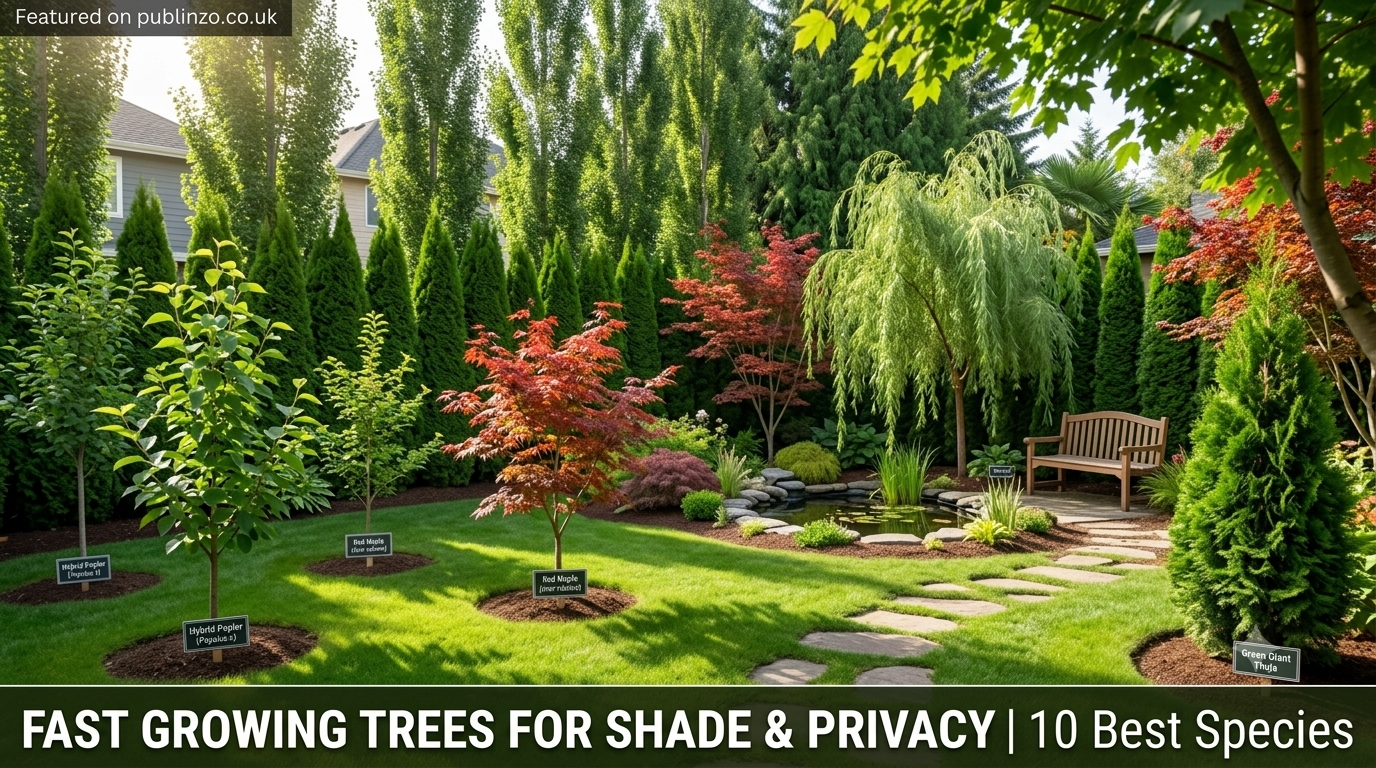


Planting fast growing trees is the most effective way to turn a barren yard into a lush, shaded oasis in just a few seasons. Whether you are looking to block nosy neighbors with a living privacy screen, cut down your summer cooling bills with natural shade, or add immediate property value to your home, selecting the right species is crucial. Many homeowners make the mistake of waiting decades for traditional oaks or maples to mature, completely unaware that specific varieties can shoot up by three to five feet every single year.
When you strategically invest in fast growing trees, you are not just buying plants; you are fast-tracking your property’s ecological and aesthetic development. Let’s dive deep into the best choices, operational planting steps, and maintenance guides that will give you rapid results without sacrificing structural strength.
Top Fast Growing Trees for Privacy and Shade
When speed is your main priority, these specific varieties stand out for their incredible growth rates, hardiness, and adaptability to various soil types across different regions.
1. Hybrid Poplar (Populus deltoides x Populus nigra)
If you want shade yesterday, the Hybrid Poplar is your absolute best bet among all fast growing trees. This tree can grow an astonishing 5 to 8 feet per year, quickly reaching a mature height of 40 to 50 feet. It features a beautiful oval shape and silvery-green leaves that turn a brilliant yellow in the autumn. It is perfect for large backyards where you need immediate vertical height to balance out large homes.
2. Thuja Green Giant (Thuja standishii x plicata)
For year-round privacy, nothing beats the Thuja Green Giant. Growing up to 3 to 5 feet annually, this dense evergreen forms a thick, luxurious wall that blocks wind, noise, and unwanted views from two-story houses. Unlike other evergreens, it is highly resistant to deer, disease, and heavy snow loads, making it a favorite for boundary lines and property borders.
3. Weeping Willow (Salix babylonica)
Known for its dramatic, sweeping branches that brush the ground, the Weeping Willow grows roughly 3 to 4 feet per year. It thrives exceptionally well in wet soils, near ponds, or in low-lying areas of your yard where water tends to collect after heavy rainfall. It provides a massive canopy of shade faster than almost any other deciduous tree.
4. Red Maple (Acer rubrum)
While most maples are slow growers, specific cultivars of the Red Maple are highly rated fast growing trees that bring vibrant color to your landscape. Growing up to 3 feet per year, it provides dense shade in the summer and turns a spectacular fire-red color during the autumn months, giving your property an instant curb appeal boost.
Key Benefits of Planting Rapid-Growth Species
Investing in quick-maturing landscaping offers several immediate advantages for your home environment that go beyond just visual aesthetics:
1. Instant Property Value and Curb Appeal
A well-landscaped yard with mature-looking greenery can boost a home’s resale value significantly compared to a bare lot. Homebuyers are willing to pay a premium for properties that already feature established shade and privacy, saving them years of waiting.
2. Microclimate Regulation and Energy Savings
Strategically planting fast growing trees on the western or southern sides of your home can block the harsh afternoon sun. This natural canopy can lower your roof and wall temperatures, reducing your indoor air conditioning costs by up to 25% during hot summer months.
3. Windbreak and Noise Reduction
Tall, dense foliage acts as a natural buffer, absorbing street traffic noise and blocking harsh winter winds. This creates a peaceful, quiet sanctuary inside your backyard where you can relax without distractions.
4. Soil Erosion Control and Drainage
The aggressive, fast-spreading root systems of these quick-growing species help bind the soil together. This prevents mudslides, filters groundwater runoff during heavy rains, and helps dry up boggy areas in your garden much faster.
Comprehensive Planting Guide for Maximum Speed
Even the most powerful fast growing trees will stall if they are planted incorrectly. Follow this step-by-step installation roadmap to ensure your saplings hit the ground running:
| Step | Action | Why It Matters |
| 1. Digging the Hole | Dig a hole twice as wide as the root ball, but exactly the same depth. | Allows roots to spread horizontally without burying the trunk flare. |
| 2. Soil Amendment | Mix native soil with organic compost or aged manure. | Provides rich nutrients without shocking the young root system. |
| 3. Settling the Root Ball | Gently loosen circling roots before placing the tree in the center. | Prevents root girdling, which can choke and kill the tree later. |
| 4. Backfilling | Fill the hole halfway, water thoroughly to eliminate air pockets, then finish filling. | Ensures direct soil-to-root contact for immediate water absorption. |
Crucial Care Tips for Maximum Growth Rate
To ensure your saplings achieve their maximum potential growth speed, you need to follow a strict maintenance routine during the first two years of their life.
Strategic Watering and Mulching
While these varieties are genetically wired to scale up quickly, they require consistent moisture to fuel that rapid cellular expansion. Water deeply twice a week rather than giving them shallow daily sprinkles. Deep watering forces the roots to grow downward, making the tree incredibly drought-resistant. Apply a 3-inch layer of organic wood mulch around the base to retain moisture and keep competitive weeds at bay, making sure the mulch does not directly touch the bark to prevent rot.
Smart Pruning Practices
Fast growth can sometimes lead to weak, brittle wood if the branches grow too close together or form tight angles. Prune away competing central leaders and dead structural branches during the late winter while the tree is dormant. This redirects all the plant’s energy into upward vertical scaling and builds a stronger main trunk that can withstand heavy storms.
Frequently Asked Questions (FAQs)
Q: Do fast growing trees have weak wood?
A: Some ultra-fast growers can have weaker wood fibers, but this can be easily managed. By providing proper structural pruning in the early years and avoiding over-fertilization, you can help the tree build a dense, strong trunk that handles wind easily.
Q: How far away from the house should I plant them?
A: As a rule of thumb, always plant large fast growing trees at least 15 to 20 feet away from your home’s foundation, utility lines, and driveways to ensure their expanding root systems don’t cause structural damage.
Q: What is the best time of year to plant these trees?
A: Early spring or mid-autumn is the absolute best time. Planting during these dormant, cooler periods allows the roots to establish themselves without having to fight intense summer heat.
Conclusion
Choosing fast growing trees allows you to take control of your property’s landscape design without waiting a lifetime for results. By matching the right species to your local soil conditions and providing consistent water and structural pruning, you can enjoy a fully mature, shaded, and private sanctuary in a fraction of the usual time. Plan your layout today, clear out competing weeds, and watch your yard transform season after season into a stunning green paradise.