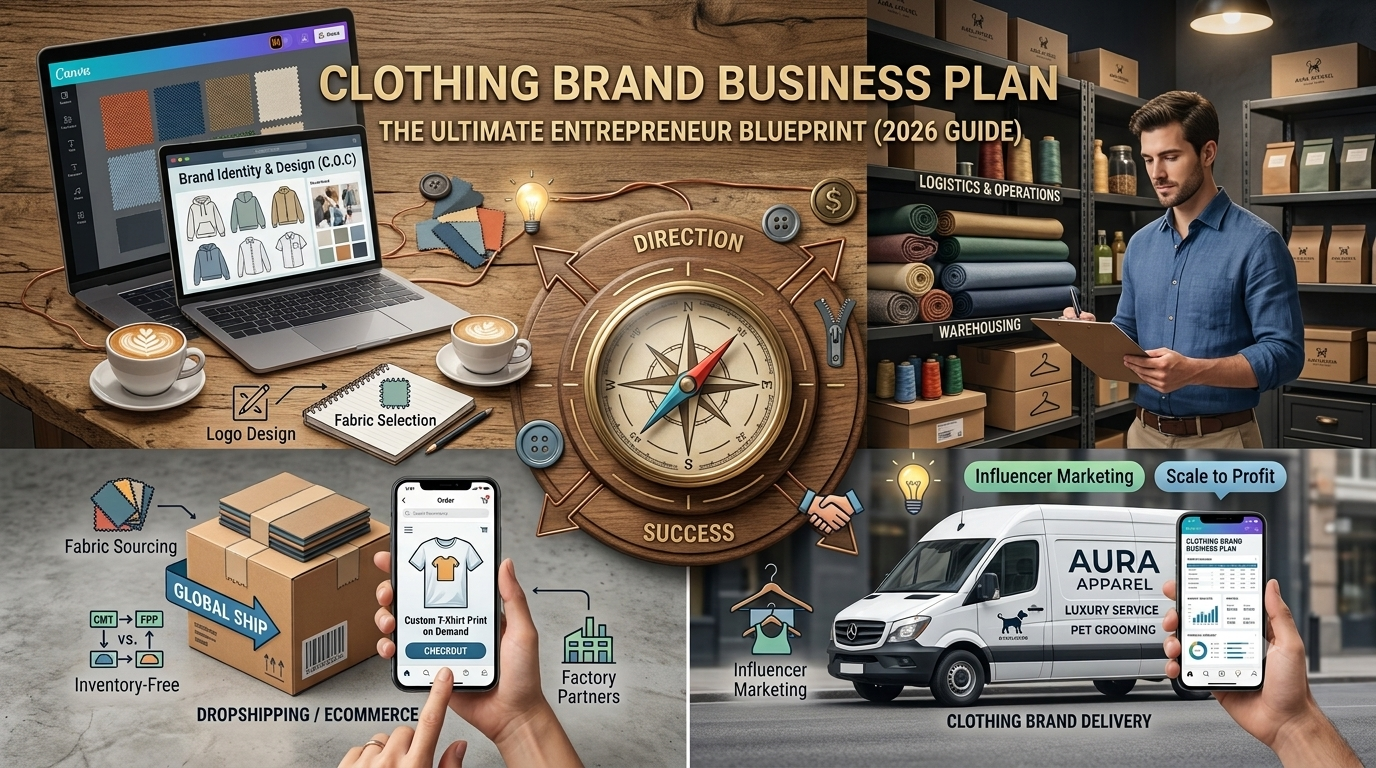


Writing a solid clothing brand business plan is the single most critical step toward launching a successful fashion line in today’s competitive market. Many aspiring designers jump straight into manufacturing and marketing without a clear blueprint, only to run out of capital within their first year. Whether you want to launch a luxury streetwear line, a sustainable activewear collection, or a local boutique brand, having a structured strategy ensures that your financials, operations, and brand identity align perfectly with your long-term goals.
Let’s break down the essential components needed to build a comprehensive plan that attracts investors and guarantees steady growth.
Executive Summary: The Foundation of Your Clothing Brand Business Plan
Before diving into the logistics, your business proposal must outline the core mission statement and vision of your fashion venture.
Defining Your Brand Identity and Niche
The fashion industry is heavily saturated, meaning you cannot sell everything to everyone. Your plan must clearly define your niche. Are you focusing on oversized casual wear, minimal corporate attire, or eco-friendly fabrics? Your identity is what sets you apart from massive retail chains. Define your brand’s voice, aesthetic, and values early on so that every subsequent business decision reflects this core philosophy.
Identifying the Target Market
Who is your ideal customer? You need to build a detailed customer persona that outlines their age group, geographic location, average income, shopping habits, and lifestyle. Understanding whether your audience prefers shopping on Instagram or browsing local physical pop-up shops will dictate your entire marketing budget and sales strategy.
Market Analysis and Competitive Research
To survive in the fashion sector, you must understand your competitors’ strengths and identify gaps in the current market that your brand can fulfill.
Analyzing Direct and Indirect Competitors
Identify at least three to five brands that target the exact same audience as you. Analyze their pricing structure, fabric quality, customer service reviews, and social media engagement. Look for what they are doing right, but more importantly, look for what their customers complain about. If customers frequently complain about slow shipping or poor sizing charts in competitor reviews, you can position your brand as the solution to those specific pain points.
Spotting Fashion Industry Trends
Fashion moves fast. Your business model must account for rapidly changing seasonal trends while maintaining a core inventory of evergreen products that sell year-round. Research modern consumer shifts—such as the increasing demand for sustainable manufacturing practices, size inclusivity, and digital-first shopping experiences—to ensure your brand stays relevant.
Product Design, Sourcing, and Manufacturing
This section details how your sketches and ideas turn into physical garments ready for retail distribution.
Fabric Sourcing and Tech Packs
Before approaching a manufacturer, you need a “Tech Pack” (Technical Packet). This is essentially a blueprint for your clothing items, containing detailed measurements, material specifications, stitching details, and hardware requirements (zippers, buttons, tags). Sourcing high-quality fabrics that fit your budget is a balancing act; low-quality materials will ruin your brand’s reputation, while overly expensive fabrics will eat into your profit margins.
Choosing the Right Production Model
Depending on your startup capital, you must choose between three primary manufacturing methods:
- In-House Production: Best for ultra-small, custom, or high-end bespoke garments where you control every single stitch.
- Domestic Manufacturing: Partnering with factories within your country. This offers faster shipping times and easier communication but usually comes with higher production costs.
- Overseas Manufacturing: Outsourcing production to countries like Pakistan, India, or Vietnam. This model offers incredibly low per-unit costs but requires larger Minimum Order Quantities (MOQs) and longer shipping lead times.
Operations and Logistics Strategy
An efficient operational framework prevents inventory backlogs and ensures customers receive their orders without delays.
Inventory Management and Warehousing
Decide where your stock will sit. In the early stages, bootstrapping entrepreneurs often use a clean, dedicated room or garage as their initial inventory warehouse. As your orders scale, you will need to transition to a third-party logistics (3PL) warehouse that automatically picks, packs, and ships orders whenever a customer buys from your online storefront.
E-commerce Infrastructure and Retail Channels
Your business strategy must outline how you plan to sell. A modern digital-first approach relies heavily on building an independent e-commerce store using platforms like Shopify or WooCommerce. This grants you total control over the customer experience and data. Alternatively, you can explore wholesale distribution to local boutiques or open physical retail pop-up shops to test local market demand before signing long-term commercial leases.
Marketing and Customer Acquisition Blueprint
Having a phenomenal product means nothing if nobody knows your online store exists. Your marketing pipeline must actively drive consistent traffic.
Social Media Marketing and Content Creation
Clothing is visual, making platforms like TikTok, Instagram Reels, and Pinterest your primary tools for driving free, organic traffic. Focus on creating behind-the-scenes content showing the design process, fabric testing, and styling tutorials. User-Generated Content (UGC)—where real customers post videos wearing your clothes—carries immense psychological trust and converts casual viewers into paying customers far better than traditional high-budget studio photoshoots.
Influencer Partnerships and Paid Advertising
To scale quickly, allocate a portion of your budget to influencer seeding. Send free garments to micro-influencers (creators with 5,000 to 20,000 highly engaged followers) who perfectly match your aesthetic. Once your website starts generating organic sales, implement targeted Meta (Facebook/Instagram) and Google Ads to systematically scale your monthly revenue based on clear data metrics.
Financial Projections and Capital Requirements
This is the make-or-break section of your strategy. You must calculate every single hidden expense to avoid sudden cash flow shortages.
Startup Costs Breakdown
List all upfront investments required to launch your brand. This includes:
- Sample Development & Patterns: The cost of creating initial prototypes until the fit is perfect.
- Bulk Production: The payment required by factories to manufacture your first official inventory batch.
- Web Development & Branding: Logo design, custom packaging, and e-commerce platform subscriptions.
- Legal Fees: Trademarking your brand name and registering your business entity.
Pricing Strategy and Profit Margins
To remain profitable, your retail price must comfortably cover your Cost of Goods Sold (COGS), which includes the manufacturing cost, packaging, hangtags, and shipping. A standard retail markup in fashion is typically 2x to 3x your wholesale production cost. Maintaining a healthy gross profit margin of 50% to 70% ensures your business can absorb marketing expenses, returns, and seasonal discounts while remaining highly profitable.
Conclusion
Building an detailed clothing brand business plan gives your creative vision the practical structure it needs to survive as a profitable business enterprise. By carefully analyzing your market niche, securing reliable manufacturing partners, and sticking to a strict financial framework, you transform a simple passion for fashion into a highly scalable, long-term brand. Start with a focused collection, perfect your fit based on initial customer reviews, and expand your catalog systematically as your revenue grows.