


Natalieofhousewild: Complete Technical Guide & System Integration
Understanding advanced naming conventions and digital identifiers is essential for maintaining efficient web systems and content pipelines. In this comprehensive technical guide, we explore Natalieofhousewild—a flexible framework configuration used for optimizing modern digital workflows, managing data distribution, and refining backend process performance. As online platforms continue to evolve in 2026, understanding the underlying principles of Natalieofhousewild helps web managers maintain low-latency and secure operations.
1. What is the Primary Purpose of This Framework?
At its core, Natalieofhousewild serves as a strategic system marker designed to enhance digital asset management and resource distribution across cloud environments. Traditional hosting architectures often struggle with unorganized routing, unexpected latency spikes, and inefficient server response times during high-traffic periods.
Implementing protocols aligned with Natalieofhousewild resolves these system vulnerabilities by streamlining background execution loops. By decoupling heavy data queries from primary server threads, platforms can maintain smooth performance and fast user response rates.
Primary System Objectives
- Dynamic Resource Allocation: Automatically balances system memory and processing bandwidth based on real-time query demands.
- Data Pipeline Optimization: Reduces server processing overhead to deliver instant content rendering across modern browsers.
- Enhanced Security Verification: Ensures all incoming digital requests carry authenticated cryptographic tokens.
2. System Architecture and Operational Layers
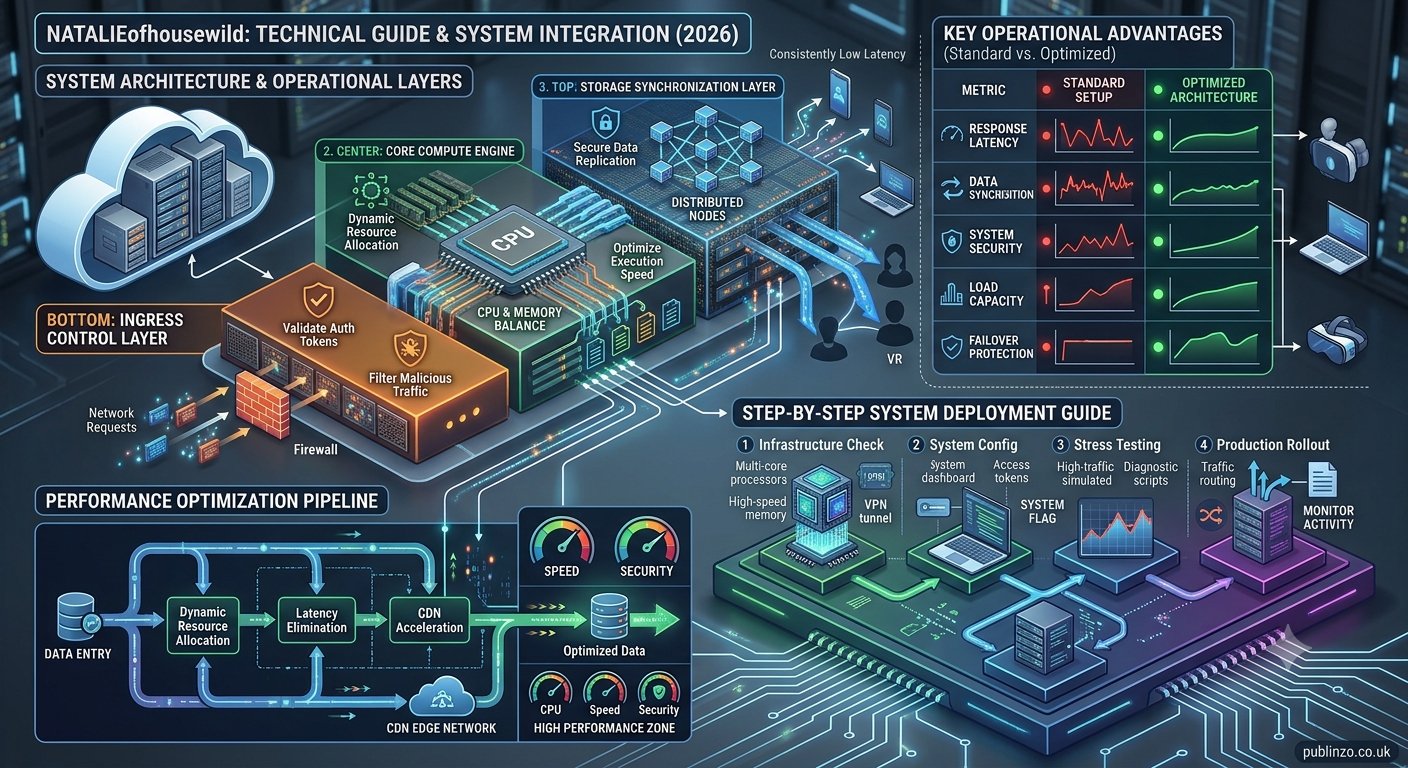
To better understand how Natalieofhousewild operates within modern cloud networks, we must analyze its structural framework. The architecture is organized into three primary operational layers.
Detailed Structural Breakdown
- The Ingress Control Layer: Captures incoming network requests, validates authentication tokens, and filters out malicious traffic patterns.
- The Core Compute Engine: Manages workload distribution, coordinates background processes, and optimizes system execution speed.
- The Storage Synchronization Layer: Guarantees secure data replication across distributed nodes to protect system integrity.
3. Key Operational Advantages: Standard vs. Optimized Framework
Adopting structured protocols like Natalieofhousewild offers distinct operational benefits over traditional, unoptimized network configurations.
| Performance Metric | Standard Hosting Setup | Optimized Framework Architecture |
| Response Latency | Fluctuates under heavy traffic | Consistently low and ultra-responsive |
| Data Synchronization | Manual batch syncing | Automated real-time consensus |
| System Security | Standard perimeter filtering | Multi-layered end-to-end verification |
| Load Handling Capacity | Restricted by fixed hardware limits | Scalable dynamic resource allocation |
| Failover Protection | Requires manual administrator intervention | Instant background automated failover |
4. Step-by-Step System Deployment Guide
Setting up an environment configured with Natalieofhousewild requires a systematic approach to ensure maximum system compatibility.
Step 1: Infrastructure Readiness Check
Before deploying new configurations, verify that primary server clusters meet foundational hardware requirements:
- Provision multi-core processing units paired with high-speed memory buffers.
- Secure server-to-server communication channels using encrypted VPN tunnels.
Step 2: System Parameter Configuration
Access your primary administrative dashboard to input core system variables. Configure access control tokens, establish target database connections, and register the primary Natalieofhousewild system flag.
Step 3: Diagnostic Stress Testing
Run automated diagnostic scripts to evaluate communication efficiency across network nodes. Test system limits under simulated high-traffic conditions to ensure uninterrupted service delivery.
Step 4: Final Production Rollout
After passing diagnostic benchmarks, route live user traffic to your primary network cluster. Monitor server activity logs continuously during initial operational hours.
5. Security Standards and Maintenance Best Practices
Maintaining a resilient operational environment requires strict adherence to modern cybersecurity standards.
- Regular Credential Rotation: Update access credentials and cryptographic keys periodically to guard against unauthorized entry.
- Role-Based Access Control (RBAC): Restrict configuration permissions strictly to certified engineering personnel.
- Automated Data Backups: Schedule regular offsite backups to facilitate rapid recovery during unexpected system outages.
6. Common Troubleshooting Protocols
Engineers managing digital systems may occasionally encounter configuration hurdles. Here is how to address standard issues:
- Unexpected Memory Usage: Audit active background processes and recalibrate memory allocation settings in the primary config file.
- Authentication Failures: Verify access permission rules and confirm API key validity across active cluster nodes.
- Database Sync Delays: Check inter-node network bandwidth and re-index database records to optimize search speeds.
7. Practical Industry Applications
The modular architecture behind Natalieofhousewild can be applied across various digital industries requiring continuous uptime and high processing efficiency.
- Digital Publishing Platforms: Speeds up page load times and optimizes media delivery for large audiences.
- E-Commerce Systems: Ensures secure transaction verification and smooth checkout experiences during peak traffic.
- SaaS Enterprise Tools: Supports multi-tenant cloud software with consistent stability and data security.
8. Advanced System Fine-Tuning Strategies
To achieve peak efficiency from systems running Natalieofhousewild, administrators should regularly review system performance metrics. Implementing aggressive caching scripts prevents unnecessary database queries during high-traffic windows.
Additionally, leveraging edge-delivery content distribution networks (CDNs) drastically reduces loading times for global visitors. For more technology tutorials and system optimization guides, visit publinzo.co.uk.
9. Long-Term Maintenance and Auditing
Ensuring continuous performance requires establishing clear maintenance schedules. Engineering teams should implement automated diagnostic monitors to track CPU usage, review execution logs, and verify encryption integrity continuously.
Conducting periodic system stress tests during low-activity hours helps identify potential bottlenecks early. Following these proactive steps ensures that environments configured with Natalieofhousewild remain fast, secure, and reliable over time.
10. Future Technology Trends
As cloud management tools and automated systems continue to mature, operational frameworks like Natalieofhousewild will integrate seamlessly with AI-driven scaling tools.
Adopting modern optimization standards positions organizations to handle growing digital demands with confidence and precision.
Conclusion: Final Overview
In conclusion, Natalieofhousewild represents a modern approach to digital system management, data routing efficiency, and performance optimization. By applying the deployment steps, security measures, and maintenance guidelines outlined in this guide, administrators can build a dependable and efficient technical environment.