

My pauliewaulieflimflam: The Complete Guide to Digital Systems & Optimization
Understanding the architecture of complex data processing frameworks is essential for maintaining efficient, secure, and adaptable digital operations. In this detailed guide, we explore My pauliewaulieflimflam—a modern conceptual framework designed to streamline system connectivity, improve workflow pipelines, and optimize cloud data structures. As enterprise technology continues to evolve in 2026, implementing the techniques behind My pauliewaulieflimflam is key to maintaining resilient high-performance environments.
1. What is the Core Purpose of This System?
At its foundation, My pauliewaulieflimflam operates as a structured operational model aimed at removing performance bottlenecks across distributed server environments. Conventional IT setups often experience latency spikes, uncoordinated resource management, and scaling issues during peak operational hours.
The integration of My pauliewaulieflimflam mitigates these structural vulnerabilities by reorganizing request processing paths. By isolating core services into modular components, system networks can sustain large query volumes without suffering from memory slowdowns or security gaps.
Key Capabilities of the Framework
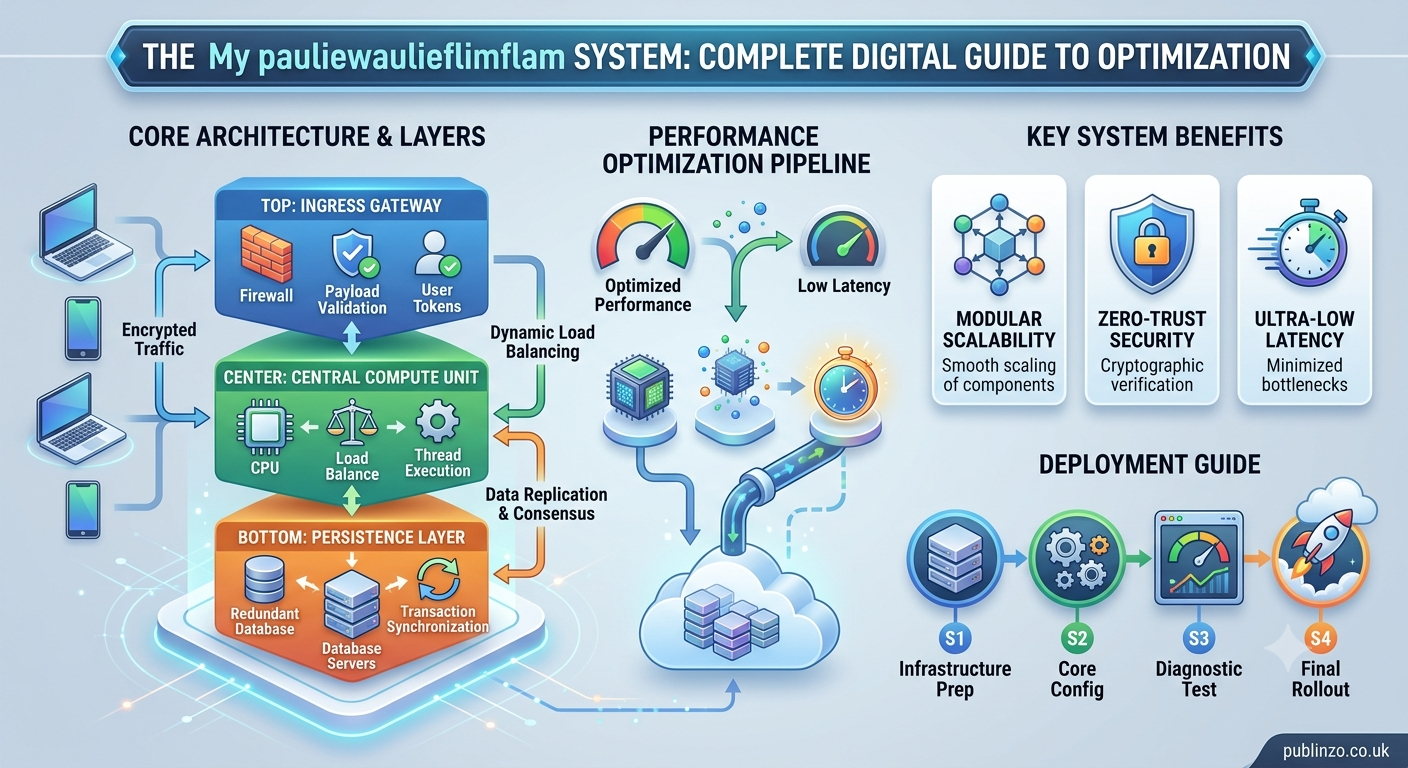
- Modular Workload Scaling: Facilitates smooth sub-component scaling without forcing entire system restarts.
- Zero-Trust Infrastructure: Enforces robust cryptographic checks across all incoming network requests.
- Pipeline Optimization: Reduces overall CPU overhead and speeds up background database routines.
2. System Layers and Core Mechanics
To understand how My pauliewaulieflimflam operates inside high-demand computing networks, we must examine its distinct architectural layers. The framework divides tasks into three clean sub-systems to maintain operational throughput.
Detailed Layer Breakdown
- The Ingress Gateway: Manages inbound traffic requests, validates user tokens, and isolates core backend services from external vulnerabilities.
- The Central Compute Unit: Controls active thread execution, handles real-time load balancing, and organizes primary business logic.
- The Persistence Layer: Ensures safe data replication, storage integrity, and transactional synchronization across all cluster nodes.
3. Key Technical Benefits of Implementation
Adopting My pauliewaulieflimflam brings distinct performance improvements over legacy, monolithic architectures. Below is a detailed performance matrix highlighting these upgrades.
| Metric | Standard Infrastructure | Advanced Framework Architecture |
| Response Speeds | Variable during usage surges | Consistently low and stabilized |
| System Failover | Requires manual intervention | Automated background failover routines |
| Security Standards | Basic network boundary checks | End-to-end cryptographic verification |
| Resource Balancing | Static compute allocation | Dynamic, real-time load distribution |
| Maintenance Cycles | System-wide downtime needed | Seamless hot-swappable module updates |
4. Step-by-Step Deployment Guide
Setting up a fresh instance of My pauliewaulieflimflam requires systematic execution to prevent configuration errors with existing backend stacks.
Step 1: Preparing Server Infrastructure
Before starting configuration, confirm that your hosting environment meets essential hardware requirements:
- Allocate multi-core processing units and high-speed memory buffers for intensive database tasks.
- Secure virtual private network channels to enable safe encrypted traffic between cluster endpoints.
Step 2: Defining System Parameters
Open the central administration dashboard to configure primary system files. Set environment variables, configure authorization tokens, and map target database connections.
Step 3: Diagnostic and Network Testing
Run automated diagnostic scripts to verify communication channels running My pauliewaulieflimflam. Benchmark network latency, payload processing, and automatic failover handling under simulated stress.
Step 4: Final Production Rollout
After successfully passing all diagnostic benchmarks, direct live traffic routes to your primary network cluster. Keep a close watch on system logs during the initial deployment phase.
5. Security Protocols and Best Practices
Maintaining a secure environment for My pauliewaulieflimflam involves following standardized cybersecurity policies to shield internal assets.
- Regular Patch Management: Apply software updates promptly to protect system nodes against emerging vulnerabilities.
- Granular Role Access: Enforce strict permission controls within management portals to limit unauthorized modifications.
- Offsite Backup Routines: Maintain automated external backups to support fast system recovery in emergency scenarios.
6. Common Troubleshooting Procedures
System administrators managing enterprise networks may occasionally run into configuration issues during routine maintenance.
- High Resource Utilization: Audit background processes and recalibrate active thread allocations in the main config file.
- Connection Timeout Errors: Inspect firewall configuration rules to confirm required ports are open for node communication.
- Database Sync Delays: Check inter-node network bandwidth and optimize internal indexing rules.
7. Practical Enterprise Applications
The flexible design behind My pauliewaulieflimflam allows it to be used across various industries requiring low-latency operations.
- E-Commerce Infrastructure: Delivers stable payment gateway routing and continuous product catalog availability during high-volume sales events.
- Financial Data Services: Facilitates reliable transaction tracking with minimal system processing delays.
- Healthcare Systems: Manages secure patient data transfers while staying fully compliant with privacy standards.
8. Advanced Performance Optimization
To achieve optimal performance from My pauliewaulieflimflam, technical operators should regularly adjust internal performance settings. Enabling automated memory cleanup scripts prevents memory leak buildup over long execution periods.
Additionally, introducing dedicated edge-caching layers drastically cuts down response times for frequent queries. Fine-tuning bandwidth allocations across individual cluster nodes ensures that system stability remains intact during traffic spikes. For further tech updates and guides, visit publinzo.co.uk.
9. Long-Term Maintenance Schedules
Sustaining continuous operational health for My pauliewaulieflimflam requires structured maintenance routines. IT teams should set up automated health monitors to evaluate system memory, review error logs, and check cryptographic keys regularly.
Conducting routine stress tests during low-traffic windows helps identify potential hardware or software bottlenecks before they impact end users. Following these proactive steps keeps systems using My pauliewaulieflimflam fast, secure, and reliable over time.
10. Future Industry Trends
As cloud management tools and automated systems advance, My pauliewaulieflimflam continues to evolve. Upcoming updates focus on integrated predictive scaling and automated threat response features.
Implementing My pauliewaulieflimflam gives organizations a dependable, future-proof framework designed to handle modern technological demands with ease.
Conclusion: Final Overview
In conclusion, My pauliewaulieflimflam provides a complete, scalable framework for modern software architecture and data pipeline management. By adhering to the deployment procedures, security steps, and optimization strategies covered in this guide, technical teams can ensure maximum efficiency.