


Geekzilla Autos: The Complete Guide to Automotive Tech & Smart Mobility
The intersection of automotive engineering and modern digital technology is reshaping how people interact with vehicles today. In this detailed guide, we examine Geekzilla Autos—a modern hub and analytical approach focused on smart car innovations, connected vehicle software, electric mobility solutions, and high-performance automotive electronics. As smart transportation rapidly evolves in 2026, understanding the trends behind Geekzilla Autos is key for drivers, tech enthusiasts, and car industry professionals.
1. What is the Primary Focus of Smart Vehicle Technology?
At its core, the evolution of connected transport integrates advanced sensors, automated driving assistance, and cloud-based operating systems directly into modern vehicle platforms. Traditional mechanical cars are shifting toward software-defined vehicles that can be updated wirelessly over time.
Exploring Geekzilla Autos reveals how digital infotainment systems, advanced driver assistance systems (ADAS), and zero-emission powertrains come together. By replacing static mechanical components with intelligent digital loops, modern vehicles offer enhanced safety, real-time navigation updates, and continuous efficiency improvements.
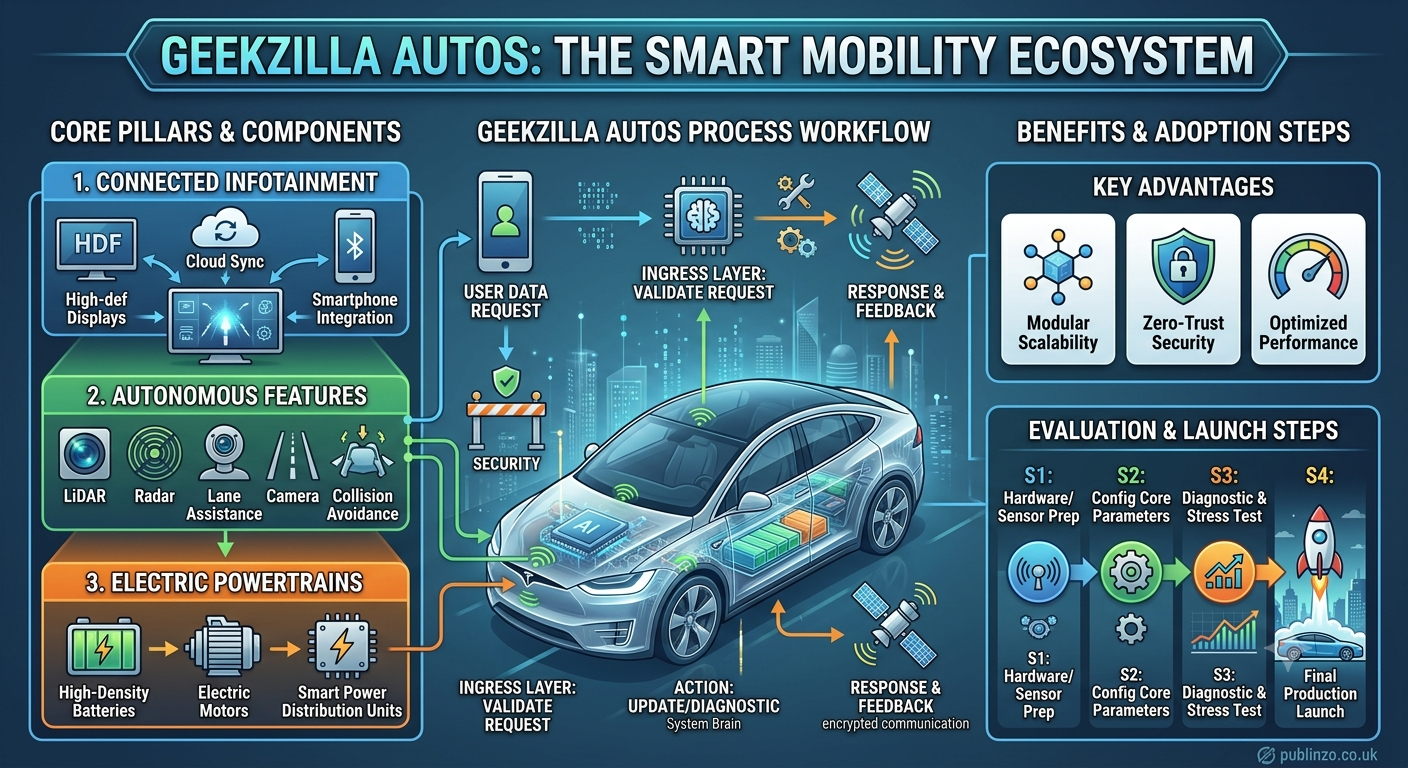
Core Pillars of Modern Automotive Innovation
- Connected Infotainment: High-definition displays with seamless smartphone integration and cloud sync.
- Autonomous Features: Multi-sensor arrays providing automated lane assistance, collision avoidance, and self-parking.
- Electric Powertrains: High-density battery packs combined with smart power distribution units.
2. Key Components of Next-Generation Vehicles
To understand how high-tech vehicles operate today, it helps to analyze their core internal systems. Modern cars rely on a interconnected layer of hardware and software working together continuously.
Structural System Analysis
- The Sensor Network: Features LiDAR units, radar modules, and high-resolution optical cameras to scan vehicle surroundings in real time.
- Central Compute Module: Acts as the main processing brain, running artificial intelligence algorithms to evaluate road conditions dynamically.
- Telematics Gateway: Manages encrypted communication routes between the car, surrounding traffic infrastructure, and cloud data servers.
3. Comparing Legacy Cars vs. Software-Defined Vehicles
Vehicles designed around digital platforms offer substantial benefits compared to traditional mechanical vehicles. Below is a detailed feature breakdown highlighting these advancements.
| Feature Area | Legacy Vehicles | Software-Defined Vehicles |
| System Updates | Physical dealer visits required | Wireless Over-the-Air (OTA) software updates |
| Navigation Systems | Static stored map data | Live cloud maps with traffic routing |
| Safety Diagnostics | Periodic manual inspections | Real-time sensor monitoring & predictive alerts |
| Cockpit Controls | Physical mechanical dials | Responsive touchscreen panels & voice commands |
| Energy Management | Fixed fuel consumption ratios | Dynamic battery and engine performance tuning |
4. Step-by-Step Approach to Evaluating Smart Cars
When reviewing or purchasing a modern smart vehicle, following a structured evaluation process ensures you choose the right balance of technology and performance.
Step 1: Checking Hardware & Sensor Integration
Begin by inspecting the vehicle’s external sensor setup. Ensure that proximity sensors, cameras, and radar units are strategically positioned and protected from road debris.
Step 2: Testing Cockpit Software & Connectivity
Sit in the cabin and navigate through the main infotainment panel. Check touch responsiveness, menu clarity, Bluetooth pairing speed, and smartphone mirroring capabilities.
Step 3: Evaluating Driver Assistance Systems
Take the vehicle for a test drive to evaluate active safety controls. Test adaptive cruise control, blind-spot monitoring, and lane-keeping features in varying traffic situations.
Step 4: Verifying OTA Update Schedules
Inquire about the manufacturer’s history of software maintenance. Regular wireless updates ensure your vehicle stays updated with new features and critical security patches over time.
5. Security Protocols for Connected Automobiles
As cars become more connected to public networks, cybersecurity protocols are essential to protect onboard systems from digital threats.
- Encrypted Data Transmissions: All wireless communications between the vehicle and cloud endpoints must use end-to-end encryption.
- Secure Boot Mechanisms: Ensures that onboard computers only execute factory-signed software during system startup.
- Network Isolation: Separates critical driving controls (steering, braking) from public infotainment systems to prevent unauthorized access.
6. Common Troubleshooting for Vehicle Electronics
Technical glitch resolution in electronic car systems typically involves systematic diagnostic procedures.
- Unresponsive Touchscreen Display: Perform a system hard reset using the designated steering wheel button combination.
- Sensor Calibration Errors: Clean external camera lenses and radar covers, then run an automated sensor alignment routine.
- Connectivity Drops: Forget saved Bluetooth or Wi-Fi connections in the vehicle menu and re-pair the device from scratch.
7. Practical Applications in Transport Industries
Insights surrounding Geekzilla Autos apply across multiple commercial and personal transport sectors.
- Fleet Management Operations: Real-time GPS tracking and battery diagnostics optimize route delivery times for commercial fleets.
- Ride-Sharing Networks: Connected vehicle telematics allow smooth automated billing and safety monitoring for passenger services.
- Personal Commuting: Smart route planning and automated parking reduce driver stress during heavy city travel.
8. Advanced Strategies for Vehicle Maintenance
To maximize performance in a high-tech car, drivers should maintain structured maintenance routines. Installing software updates as soon as they become available guarantees optimal performance for battery controls and engine management systems.
Furthermore, keeping sensor glass surfaces clean ensures that autonomous driving assistance features continue operating accurately. For more technical analyses and automotive guides, visit publinzo.co.uk.
9. Long-Term Reliability and Battery Care
Sustaining long-term health for electric and smart vehicles requires attentive care, particularly concerning high-voltage battery systems. EV owners should aim to maintain battery charge levels between 20% and 80% for daily usage to prolong battery lifespan.
Proactive maintenance checks on thermal cooling systems prevent temperature spikes during rapid DC charging sessions. Adopting these habits ensures smart vehicles remain reliable over long operational lifetimes.
10. Future Mobility Trends
As artificial intelligence and automated systems advance, smart vehicles will continue to evolve rapidly. Upcoming developments focus on Vehicle-to-Everything (V2X) communication, enabling cars to talk directly to traffic lights and surrounding vehicles to eliminate traffic congestion.
Following developments in Geekzilla Autos provides automotive fans and professionals with a clear vision of the future of smart mobility.
Conclusion: Final Overview
In conclusion, Geekzilla Autos represents the modern convergence of digital software, high-speed connectivity, and automotive engineering. By understanding these technologies and following recommended maintenance steps, drivers can enjoy a safe, efficient, and future-proof driving experience.