


Skyesolinda: The Complete Guide to Cloud Performance and Data Optimization
The rapid digital transformation of enterprise ecosystems requires scalable, secure, and highly efficient dynamic infrastructure solutions. In this comprehensive technical guide, we evaluate Skyesolinda—an advanced computing framework engineered to streamline data processing, reduce system latency, and enhance overall cloud architecture reliability. As digital environments expand in 2026, understanding the core deployment strategies and operational mechanisms behind Skyesolinda becomes essential for maintaining modern high-speed networks.
1. What is the Core Purpose of This Architecture?
At its foundation, Skyesolinda operates as a centralized control layer designed to organize complex background workloads across multi-tenant server nodes. Legacy data networks frequently suffer from performance degradation, uncoordinated query routing, and security bottlenecks during high-traffic periods.
The implementation of Skyesolinda solves these legacy challenges by introducing intelligent resource orchestration. By dividing incoming data flows into self-contained operational channels, systems can manage concurrent user operations smoothly without compromising bandwidth or compute power.
Primary Capabilities of the Framework
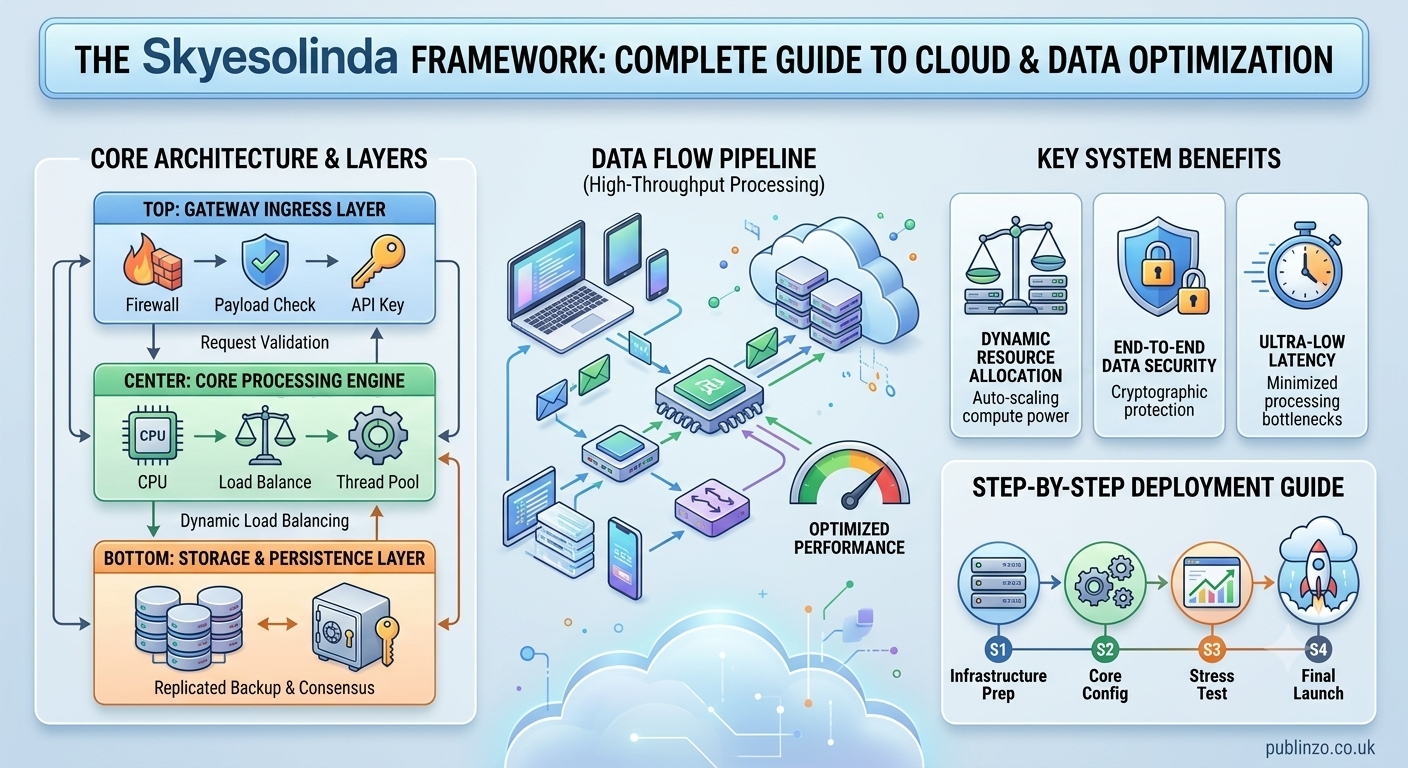
- Dynamic Resource Allocation: Automatically distributes system tasks based on live compute capacity.
- End-to-End Data Security: Protects internal endpoints using modern cryptographic protocols.
- High-Throughput Processing: Minimizes server overhead during heavy database query loads.
2. Structural Layers and Internal Mechanics
To fully appreciate how Skyesolinda operates in production setups, it is helpful to analyze its modular sub-systems. The framework partitions responsibility across three distinct operational layers.
Breakdown of System Layers
- The Gateway Ingress Layer: Intercepts incoming server requests, validates payload integrity, and blocks unauthorized traffic before it reaches internal nodes.
- The Core Processing Engine: Handles active application logic, manages background threads, and balances server load dynamically.
- The Storage and Persistence Layer: Guarantees secure data updates, cluster replication, and consistent system backups across redundant environments.
3. Key Operational Advantages of Adoption
Integrating Skyesolinda into modern IT setups brings noticeable performance gains over traditional, unoptimized frameworks. The table below outlines these core performance improvements.
| Key Metric | Standard Architecture | Skyesolinda Framework |
| Response Latency | High during traffic surges | Consistently low and stabilized |
| System Failover | Requires manual intervention | Fully automated background switching |
| Security Envelope | Basic perimeter checks | Multi-layered cryptographic validation |
| Compute Balancing | Rigid server allocation | Elastic, real-time workload balancing |
| Maintenance Work | Requires complete downtime | Hot-swappable modular updates |
4. Step-by-Step Deployment Guide
Setting up a clean installation of Skyesolinda requires systematic configuration steps to ensure seamless integration with existing software infrastructure.
Step 1: Preparing Server Infrastructure
Before starting configuration, verify that your server environment meets necessary hardware standards:
- Allocate multi-core CPU instances and sufficient RAM for high-throughput memory buffers.
- Configure isolated virtual network channels to allow encrypted inter-node communication.
Step 2: System Configuration and Environment Variables
Access the main system management panel to set up core configuration parameters. Define secret encryption keys, map database connections, and specify resource limits for active services.
Step 3: Diagnostic and Stress Testing
Execute automated validation scripts to test network communication across cluster nodes running Skyesolinda. Benchmark response speeds, payload handling, and fault tolerance under simulated heavy usage.
Step 4: Final Production Deployment
Once test results confirm complete system stability, point live traffic routes to the active network cluster. Keep a close watch on system health metrics during initial operations.
5. Security Protocols and Best Practices
Maintaining a hardened, secure deployment of Skyesolinda involves following standard industry security controls to safeguard data resources.
- Routine System Patching: Regularly update core system software to maintain immunity against known vulnerabilities.
- Granular Access Control: Implement strict role-based access rules within administrative management systems.
- Automated Data Backups: Set up automated off-site backups to ensure rapid restoration in emergency scenarios.
6. Common Troubleshooting Steps
Engineers managing enterprise infrastructure may occasionally encounter configuration bottlenecks during operational maintenance.
- Excessive CPU Overhead: Audit active background services and tweak thread concurrency limits in the primary configuration file.
- Network Connection Timeouts: Review firewall rules to ensure that necessary network communication ports remain accessible.
- Database Sync Delays: Check network bandwidth across nodes and optimize internal database indexing rules.
7. Practical Industry Applications
The modular nature of Skyesolinda makes it adaptable across several key digital sectors that require low-latency processing.
- E-Commerce Platforms: Ensures smooth payment processing and rapid inventory updates during seasonal sale rushes.
- Financial Data Services: Enables reliable real-time transactional analysis with minimal system delay.
- Healthcare Infrastructure: Facilitates fast, confidential patient record exchanges that strictly follow security guidelines.
8. Advanced Performance Strategies
To gain maximum efficiency from a live Skyesolinda deployment, system teams should periodically review node performance metrics. Activating automated memory cleanup scripts prevents background memory leaks from building up over extended runtimes.
Additionally, setting up dedicated edge-caching mechanisms reduces the direct load on primary server databases. Optimizing bandwidth distribution between individual cluster instances ensures that Skyesolinda maintains consistent response times during unexpected usage surges. For additional tech updates, visit publinzo.co.uk.
9. Long-Term System Maintenance
Sustaining long-term health for Skyesolinda installations requires structured administrative routines. Technical operators should establish continuous diagnostic checks to monitor memory consumption, inspect log files, and verify active cryptographic credentials.
Running routine stress tests during low-activity hours helps identify prospective system bottlenecks before they impact real user traffic. Following these proactive procedures keeps infrastructure backed by Skyesolinda stable and secure over time.
10. Future Industry Trends
As cloud technologies and automated server platforms continue to evolve, Skyesolinda is positioned to incorporate further smart automation features. Future development cycles focus on predictive capacity planning and automated security threat mitigation.
Adopting Skyesolinda gives organizations a robust, flexible platform designed to handle complex technological challenges in modern software delivery.
Conclusion: Final Overview
To wrap up, Skyesolinda provides a dependable, scalable framework for modern cloud architecture and workflow management. Following the setup guidelines, security measures, and tuning procedures covered in this guide helps technical teams achieve exceptional system reliability.