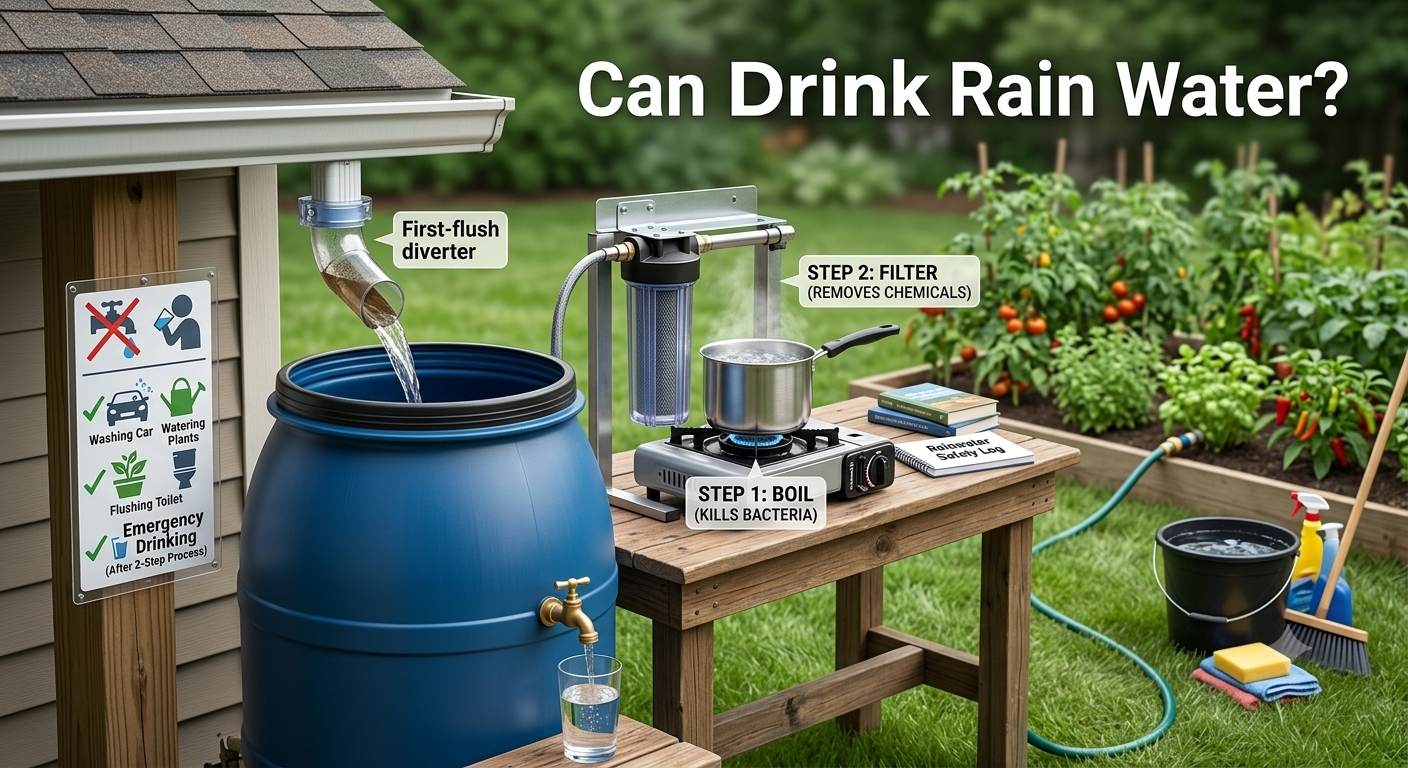


Can You Drink Rain Water? The Ultimate Safety and Purification Guide
Imagine it is pouring outside, the air smells fresh, and you see clean water filling up your buckets. It looks pure, natural, and completely refreshing. But a critical question comes to mind: can you drink rain water safely?
For centuries, collecting rainwater (known as rainwater harvesting) was a primary source of drinking water for civilizations across the globe. However, times have changed drastically. With industrial growth, global pollution, and environmental shifts, the water falling from the sky today is not the same as it was a hundred years ago.
In this ultimate, comprehensive guide, we will break down the hidden dangers of drinking rain water, the scientific reasons behind why it can be risky, how you can safely purify it at home for survival situations, and the best eco-friendly ways to use it without risking your health.
Is It Safe to Drink Rain Water? The Short Answer
The short answer is no, it is generally not safe to drink raw, untreated rain water, especially in modern times.
While rain starts as pure water vapor up in the clouds through the natural process of evaporation, it does not stay pure for long. As soon as a raindrop begins its journey downward, it passes through layers of the atmosphere, clouds, and local air. During this descent, it acts like a sponge, absorbing various contaminants, chemicals, gases, and microscopic particles. Therefore, drinking it straight from the sky without any filtration can lead to serious health complications and infections.
The Hidden Dangers: Why You Shouldn’t Drink Untreated Rain Water
Before you consider collecting a glass of fresh rain water, it is important to understand the science of what is actually hiding inside those clear drops. Here are the major risks associated with consuming raw rain water:
1. Atmospheric Pollutants and Gases
As rain falls through the sky, it dissolves gases present in the air. If you live near an industrial area, a major city, or a highway, the air contains high levels of sulfur dioxide, nitrogen oxides, carbon monoxide, and heavy metal particles from factory smoke and car exhaust. When rain mixes with these components, it can even become slightly acidic (known as acid rain), which is highly toxic to consume.
2. PFAS (The Infamous “Forever Chemicals”)
In recent years, environmental scientists have discovered a terrifying truth: rainwater everywhere on Earth—even in remote places like Antarctica—now contains low levels of PFAS (per- and polyfluoroalkyl substances). These are man-made chemicals used in non-stick cookware, waterproof clothing, and firefighting foams. They are called “forever chemicals” because they do not break down in nature or inside the human body. Consuming water with PFAS over time can lead to immune system issues, fertility problems, and an increased risk of certain cancers.
3. Roof and Gutter Contamination
Most people collect rain water using a rainwater harvesting system attached to their roofs. This is where the highest level of contamination occurs. Your roof is exposed to nature 24/7, meaning it accumulates:
- Bird Droppings and Animal Waste: These carry dangerous pathogens.
- Insect Parts and Dead Bugs: These decay and rot in your gutters.
- Mold, Moss, and Algae: These thrive in damp areas on your roof shingles.
- Toxic Building Materials: Many modern roofs are made of asphalt shingles, asbestos, or chemically treated metal, which leach toxic chemicals and heavy metals (like lead) directly into the rushing water.
4. Harmful Bacteria, Viruses, and Parasites
Stagnant or improperly stored rain water can quickly become a breeding ground for biological hazards. If consumed raw, bacteria such as E. coli and Salmonella, or parasites like Giardia and Cryptosporidium, can enter your digestive system. This can result in severe gastrointestinal illnesses, causing symptoms like intense stomach cramps, vomiting, chronic diarrhea, and dehydration.
How to Make Rain Water Safe for Drinking: Step-by-Step Purification
If you are in a survival situation, living off-grid, or simply want to utilize rainwater as a backup drinking source, you must put it through a strict, multi-stage purification process. You cannot rely on just one method.
Here is exactly how you can clean and sanitize rain water step-by-step to make it 100% safe for human consumption:
Step 1: Pre-Filtration (Sediment Removal)
Before treating the water chemically or biologically, you need to remove physical dirt. Pass the collected rain water through a fine mesh screen, a clean cloth, or a dedicated sediment filter. This will catch large particles like leaves, sand, twigs, roof debris, and visible dirt.
Step 2: Boiling (To Kill Biological Hazards)
Boiling water is the oldest and most reliable method to eliminate biological threats.
- Pour your pre-filtered water into a pot and bring it to a rolling boil.
- Let it boil continuously for at least 1 to 3 minutes (if you are at a high altitude above 6,500 feet, boil it for a full 3 minutes).
- What it does: The intense heat destroys all active bacteria, viruses, and parasites, making the water biologically safe.
- What it doesn’t do: Boiling will not remove heavy metals, chemical pollutants, pesticides, or PFAS.
Step 3: Carbon Filtration (To Remove Chemicals and Heavy Metals)
To get rid of the chemical pollutants that boiling misses, you must pass the cooled, boiled water through a high-quality activated carbon filter.
- Standard pitcher filters (like Brita) can remove basic tastes and chlorine, but for rainwater, it is highly recommended to use a heavy-duty gravity filter (like a Berkey system) or a Reverse Osmosis (RO) system.
- What it does: The activated carbon binds to organic chemicals, heavy metals, pesticides, and significantly reduces PFAS levels, leaving the water tasting crisp and clean.
Step 4: Chemical Disinfection (Emergency Alternative)
If you are in an emergency situation where you absolutely cannot build a fire or use electricity to boil water, you can use chemicals to disinfect it:
- Water Purification Tablets: You can purchase chlorine dioxide or iodine tablets from outdoor stores. Drop them into the water according to the package instructions and wait the required time (usually 30 minutes).
- Unscented Household Bleach: If tablets aren’t available, you can add 2 to 4 drops of regular, unscented 6% household liquid bleach per gallon of water. Stir it thoroughly and let it sit for at least 30 minutes before drinking. It should have a very slight chlorine scent; if it doesn’t, repeat the dose and let it sit for another 15 minutes.
Safe and Brilliant Ways to Use Rain Water (Without Drinking It)
If you do not want to go through the lengthy and expensive process of heavy purification, you don’t have to let that free water go to waste! Rainwater collection is an amazing eco-friendly practice. Here are the best ways to utilize raw rain water safely around your house:
| Use Case | Safety Level | Why It Is Great |
| Watering Your Garden & Plants | 100% Safe | Plants absolutely love rain water. Unlike municipal tap water, rain water does not contain harsh chemicals like chlorine or fluoride, allowing your soil to maintain its natural nutrients. |
| Washing Cars and Outdoor Gear | 100% Safe | Rainwater is naturally “soft” water, meaning it lacks the heavy minerals found in well water. This makes it perfect for washing cars, windows, and decks without leaving annoying white mineral spots behind. |
| Flushing Toilets | 100% Safe | Toilet flushing accounts for a massive chunk of your monthly water bill. By setting up a simple bucket system or diversion pipe to your bathrooms, you can use raw rain water to flush away waste and conserve clean drinking water. |
| Doing Laundry | Safe (With Caution) | Because it is soft water, it requires less laundry detergent to create a rich lather. However, ensure the water was collected from a clean metal or plastic surface rather than a dirty, mossy asphalt roof to avoid staining clothes. |
Rainwater Harvesting: Best Practices for Storage
If you plan on collecting rainwater long-term, you must follow proper storage guidelines to prevent it from turning into a hazardous sludge:
- Use Food-Grade Containers: Only store your water in high-density polyethylene (HDPE) plastic barrels or high-quality stainless steel tanks. Never use containers that previously held toxic chemicals or oil.
- Install a First-Flush Diverter: This is a simple mechanical device installed on your gutter system. It routes the very first few gallons of a rainfall—which contains all the accumulated roof dirt, bird poop, and dust—away from your storage tank. Once the dirty water is diverted, clean water flows into your main barrel.
- Keep it Sealed and Dark: Always keep your storage tanks tightly covered with a secure lid and a fine mesh screen over the inlets. This prevents mosquitoes from breeding inside and blocks sunlight, which stops toxic algae from growing.
Conclusion: The Final Verdict
So, can you drink rain water?
The final verdict is clear: Only if it has been properly filtered, boiled, and purified. Drinking raw rain water straight from a bucket or a downspout puts you at risk of chemical poisoning and severe stomach infections due to modern atmospheric pollution and roof debris.
To stay completely safe, always stick to tested municipal tap water or certified bottled water for your daily hydration needs. Save your harvested rain water for your beautiful garden, outdoor cleaning chores, and emergency backup supplies. Stay smart, purify properly, and protect your health!